
THE POWDER COAT & ELECTROCOATING EXPERTS FOR OVER 30 YEARS
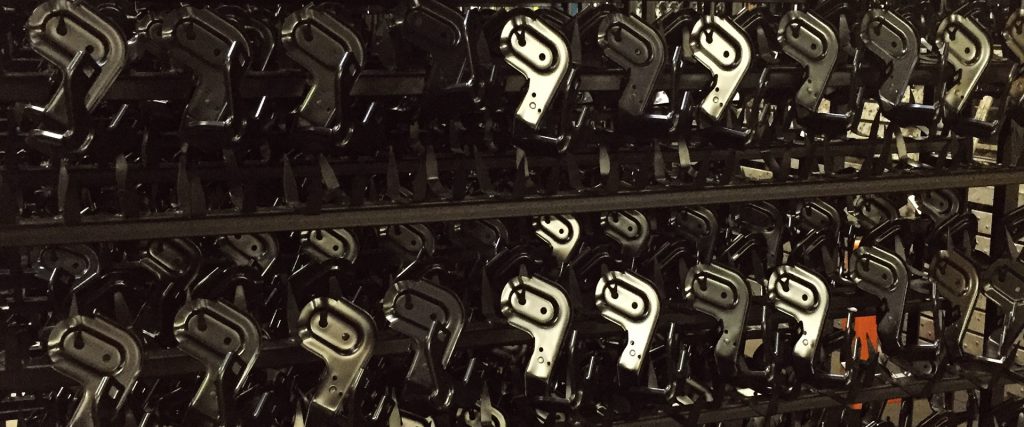
Small parts racked for electrocoating at Powder Cote II

Electrocoating

Electrocoating (e-coat) is an organic coating method that uses electrical current to deposit paint onto a part or assembled product. Because of its ability to coat even the most complex parts and assembled products with specific performance requirements, electrocoating is an excellent option for precise coating situations and uniform thickness.

Our electrocoat finishing system encompasses a 16 stage zinc phosphate pretreatment system followed by the electrocoat application. The electrocoat application comprises a unique automatic voltage control system working simultaneously with the direct power source which delivers uniform film thickness regardless of square footage being coated.
Uses & Specs

E-Coat can be used as a primer, top coat or both, and also with other types of coatings, such as powder. E-coat offers a low applied cost and is ideal for situations calling for precise film control.

  • Slide Transfer Processing System
  • Monorail Processing System
  • Power & Free Material Handling
  • Four Hanging & Packing Stations
  • Henkel Pre-Treat Chemistry
  • 16 Stage Pre-treat Process
  • BASF Cathoguard 525 Paint
  • 4000 LB Lift Capacity
  • Offline Acid Etching
  • Processing Window
    • Length: 60”
    • Width: 102”
    • Height: 72″
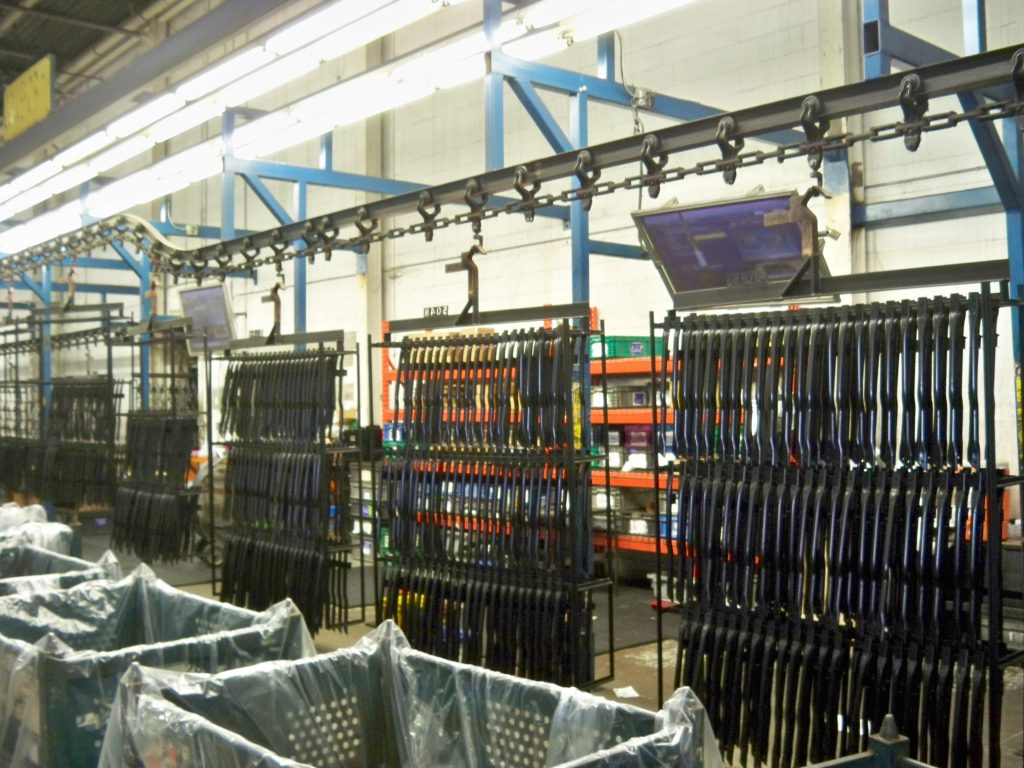
Electrocoat (e-coat) line at Powder Cote II

Electrocoating FAQs

What does your electrocoat process include?

Our e-coat system runs a 16-stage zinc phosphate pretreatment followed by an automated application of BASF Cathoguard 525 paint, producing uniform film thickness on even the most complex parts and assembled products.

What size parts can you e-coat?

The electrocoat line carries a processing window of 60" long by 102" wide by 72" high with 4,000 lb lift capacity, supported by Power & Free material handling and offline acid etching.

When is e-coat the right choice?

E-coat excels on complex geometries and assembled products that need uniform coverage and corrosion protection — it reaches recesses and interior surfaces spray methods cannot. For the full comparison, see e-coat vs powder coat.